
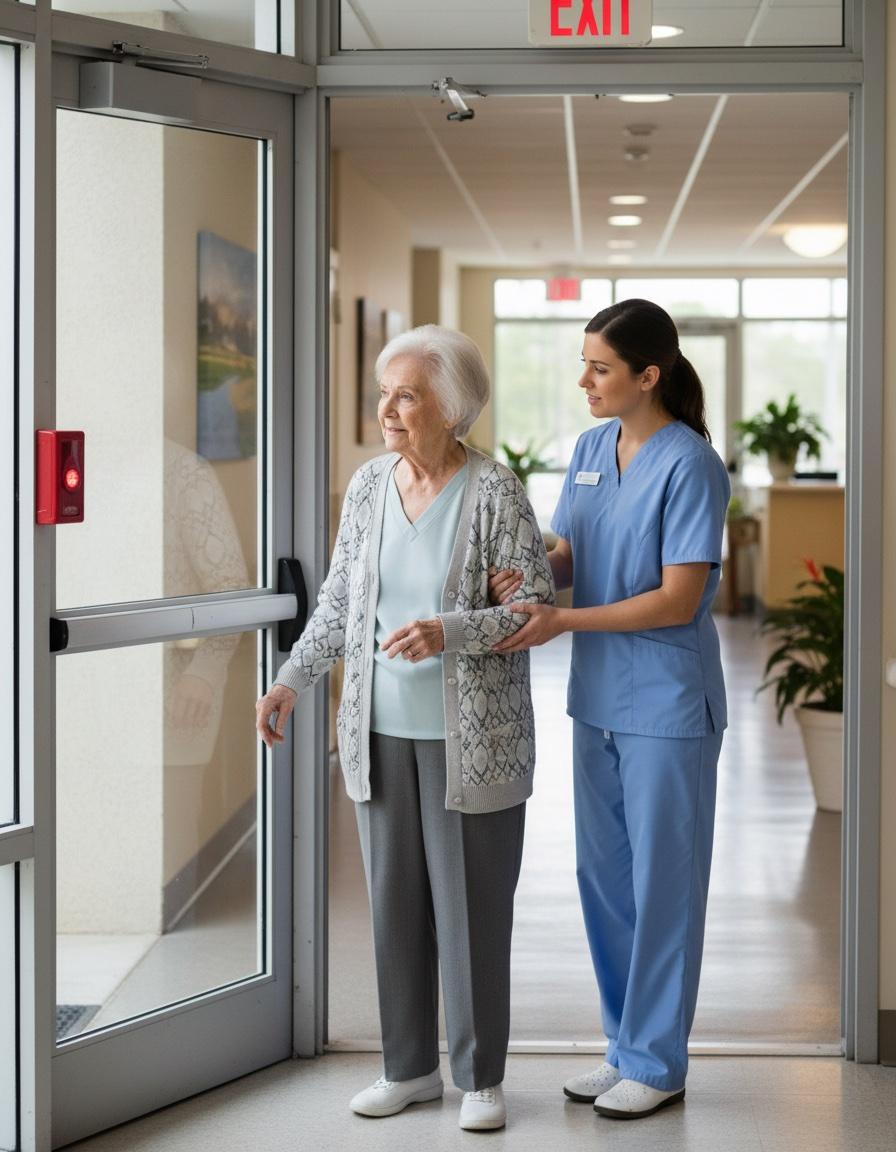
Nursing home elopement — when a resident leaves a care facility without authorization or supervision — is one of the most dangerous situations a long-term care facility can face. It primarily affects elderly residents with dementia, Alzheimer's disease, or other cognitive impairments who may wander in search of a past home, a loved one, or simply in response to confusion and anxiety. The consequences range from minor disorientation to severe injury and death. Yet elopement is largely preventable when facilities maintain proper staffing, security, training, and individualized care planning.
This guide explains the causes of elopement, strategies facilities should use to prevent it, the physical risks residents face when they elope, how to report an elopement incident, and the legal responsibilities that nursing homes carry when an elopement results in harm.
What Is Nursing Home Elopement?
Nursing home elopement refers to a resident leaving a nursing home or assisted living facility without proper authorization and adequate supervision. It most commonly involves residents who have cognitive impairments — such as dementia or Alzheimer's disease — that impair their judgment, memory, and awareness of risk. These residents may believe they need to leave for reasons that feel completely real to them: returning to a childhood home, going to work, or searching for a family member. They are not acting irrationally by their own understanding, but they are placing themselves in significant danger.
Elopement requires immediate action. Time is of the essence — the longer a cognitively impaired resident remains outside unsupervised, the greater the risk of a life-threatening incident. Facilities with effective elopement prevention protocols can often detect and prevent unauthorized exits before they occur. When they fail to do so, the consequences for residents and their families can be devastating.
Causes of Nursing Home Elopement
Understanding why elopements occur helps families evaluate whether a facility is adequately managing risk. The most common causes include:
Cognitive Impairment
Dementia and Alzheimer's disease are the leading underlying factors in nursing home elopement. These conditions impair a resident's ability to judge danger, recognize their environment, or remember where they are and why. Residents may feel a persistent urge to leave — to go home, to find a family member, or to fulfill a goal that made sense decades ago. The cognitive disorientation that drives this behavior cannot be reasoned away, which is why prevention requires environmental and procedural safeguards rather than simply telling a resident they should stay.
Insufficient Staffing Levels
When nursing homes are understaffed, caregivers cannot monitor all residents adequately. A staff member managing too many residents at once may be unable to notice when someone heads toward an exit. Understaffing also affects care quality more broadly — residents who feel lonely, unsatisfied, or unsafe are more likely to try to leave. Adequate staffing is not only a regulatory requirement; it is a frontline elopement prevention tool.
Lack of Adequate Security Measures
Nursing homes should have layered security protocols specifically designed to prevent unauthorized exits. These include alarmed exit doors, secured perimeters, video surveillance, and designated safe wandering areas where residents can move freely without risk of exiting the facility. When these systems are absent, poorly maintained, or turned off for convenience, elopement risk rises dramatically.
Inadequate Staff Training
Staff members must be trained to identify residents at risk for elopement and to recognize early behavioral signs that a resident may be preparing to leave — such as repeatedly approaching exits, asking to go home, or displaying increased agitation. They also need crisis de-escalation skills to redirect residents calmly and effectively. Without this training, staff may inadvertently miss warning signs or mishandle situations in ways that escalate elopement attempts.
Prevention and Mitigation Strategies for Nursing Home Elopements
Effective elopement prevention requires a multi-layered approach. No single measure is sufficient on its own — facilities must address staffing, security, training, individualized care, and the physical environment simultaneously.
1. Proper Staffing Levels
Adequate staffing is one of the most critical prevention measures. With sufficient staff, nursing homes can maintain closer supervision of at-risk residents, respond quickly to elopement warning signs, and ensure that exits remain properly monitored. A higher staff-to-resident ratio also allows for more personalized attention, reducing the isolation and restlessness that can motivate residents to attempt to leave.
2. Comprehensive Staff Training
Staff should receive ongoing training on recognizing elopement risk factors, understanding the behavioral patterns of residents with dementia, and using de-escalation techniques to redirect residents without confrontation. Training should also cover the facility's specific elopement protocols, including how to respond if a resident is discovered missing. A calm, knowledgeable caregiver is often the most effective line of defense against elopement.
3. Enhanced Security Measures
Physical security measures should include alarmed exit doors and windows, a secured perimeter such as fencing or locked gates, and video surveillance in common areas and near exits. These systems must be properly maintained and regularly tested. Facilities may also use wander management technology — wristbands or electronic tags that trigger alarms if a resident approaches a monitored exit. Security personnel or staff trained in security roles can supplement these systems with active monitoring.
4. Individualized Care Plans
Every resident at risk of elopement should have a detailed, individualized care plan that documents their elopement history, known triggers, behavioral patterns, and preferred activities. Understanding what motivates a resident to attempt to leave enables staff to proactively address those needs — providing companionship, meaningful engagement, or reassurance before a situation escalates. Care plans should be reviewed and updated regularly as the resident's condition changes.
5. Environmental Modifications
The physical environment of a nursing facility can be designed to reduce elopement risk. Modifications may include removing or camouflaging exit signs and door handles that might attract residents with dementia, installing motion sensors in hallways and near exits to alert staff of nighttime movement, and creating enclosed outdoor areas where residents can safely walk and enjoy fresh air without the risk of leaving the facility. Clear visual cues and consistent layouts also help residents navigate their environment with less disorientation.
6. Collaborative Approach with Families and Health care Providers
Preventing elopement is a team effort. Families should be included in care planning discussions and kept informed about their loved one's elopement risk level and the specific measures in place. Open communication channels between staff, families, and health care providers — including geriatricians and psychiatric specialists — allow for timely updates when a resident's behavior changes. Families who understand the risks and the facility's protocols can also serve as an additional layer of oversight during visits.
By implementing these layered prevention strategies, nursing homes can significantly reduce the risk of elopement. Administrators and staff must continually evaluate and update these strategies to reflect the evolving needs and behaviors of the residents in their care.
The Risk of Physical Injuries Due to Elopement
When a resident elopes from a nursing home, the consequences can be severe. The same cognitive impairments that led to the elopement also prevent the resident from recognizing or responding appropriately to external dangers. Common injuries and outcomes include:
- Falls: Disoriented residents unfamiliar with their surroundings are at high risk of falls, which can result in fractures, head injuries, and other serious trauma.
- Traffic accidents: Residents who wander onto roads or highways may be struck by vehicles, resulting in catastrophic or fatal injuries.
- Exposure to the elements: Prolonged exposure to extreme heat or cold can lead to heatstroke, hypothermia, or other serious weather-related conditions — particularly dangerous for elderly individuals who may not realize they are in distress.
- Physical assault: Vulnerable, disoriented residents who elope may encounter individuals who seek to harm or exploit them.
- Medication mismanagement: Residents who leave the facility may miss doses of critical medications, leading to health complications, seizures, or worsening of existing conditions.
- Emotional distress: Elopement incidents cause significant psychological trauma for residents and their families, potentially resulting in anxiety, depression, or post-traumatic stress.
Nursing homes must have effective elopement prevention protocols in place to minimize these risks. When they do not, and a resident is harmed, the facility may bear legal responsibility for that harm.
Reporting an Elopement Incident
If a resident has eloped, the most urgent priority is ensuring their safe return. Contact the facility immediately if you become aware of an elopement and ask what steps they are taking. If you believe the resident is in immediate danger, call 911 and provide local law enforcement with the resident's description, last known location, and any other relevant details. Provide as much specific information as possible — what the resident was wearing, their usual behavioral patterns, and any places they might try to go.
After the immediate safety concern is resolved, elopement incidents should also be reported to the state agency that oversees nursing home licensure and to the Long-Term Care Ombudsman Program in your state. These agencies can investigate whether the facility's prevention protocols met the required standard of care and take regulatory action if they did not. For state-specific reporting contacts, visit our state-by-state filing guide at /state-guides.
Legal Implications of Nursing Home Elopement
From a legal perspective, nursing home elopements can have profound implications, particularly when a resident sustains injuries or dies as a result. Nursing homes have a duty of care to protect their residents. When a facility fails to implement adequate elopement prevention measures — proper staffing, security systems, staff training, and individualized care planning — and a resident is harmed as a result, the facility may be liable for negligence.
Injured residents or their families may have grounds to pursue legal action seeking compensation for medical expenses, pain and suffering, and other damages resulting from elopement-related injuries. Nursing homes are not automatically liable every time an elopement occurs — but when their failures contributed to the incident, accountability is appropriate. Families considering legal action should consult an attorney experienced in nursing home negligence to evaluate the specific circumstances of the case.
Is your loved one safe?
Neglect and abuse in nursing homes can constitute medical malpractice. If you suspect your family member is at risk, legal intervention may be the most effective path forward.
Request Free Case Reviewarrow_forward